
Keyword Research & Page Mapping
Turn Search Demand Into a Clear Website Content Plan
Random keyword lists don't build organic traffic. Kaboom Digital SEO maps search demand to a structured content plan — matching the right keywords to the right pages, eliminating cannibalization, and prioritizing work by business value and competitive opportunity.
Part of every SEO Strategy engagement — also available as a standalone service.

The Research Process
How We Find the Keywords That Actually Move Your Business
Effective keyword research starts with understanding what your customers are actually searching — and what those searches mean. We analyze intent, volume, difficulty, and competitive context before any keyword is assigned to a page.
Search Intent Analysis
We categorize keywords by intent — informational, commercial, navigational, and transactional — so every page is built to match what searchers actually want at each stage of the decision.
Volume and Difficulty Assessment
We evaluate monthly search volume and keyword difficulty to identify realistic opportunities that balance traffic potential with competitive feasibility for your specific domain.
Primary and Supporting Keywords
Each page is assigned one clear primary keyword and a structured set of supporting keywords that reinforce topical relevance without diluting the page's focus.
Service and Location Keywords
For local and multi-location businesses, we layer in service-area and city-level keywords to capture high-intent searches from customers in your target markets.
Content Opportunity Identification
We surface keyword clusters where your competitors rank but you don't — revealing gaps that represent real content opportunities worth pursuing.
Competitive Keyword Intelligence
We analyze the keyword profiles of three to seven direct competitors to understand where search demand is concentrated and where your best entry points are.
Page Mapping & Cannibalization
Assign Every Keyword to the Right Page — Before Content Is Written
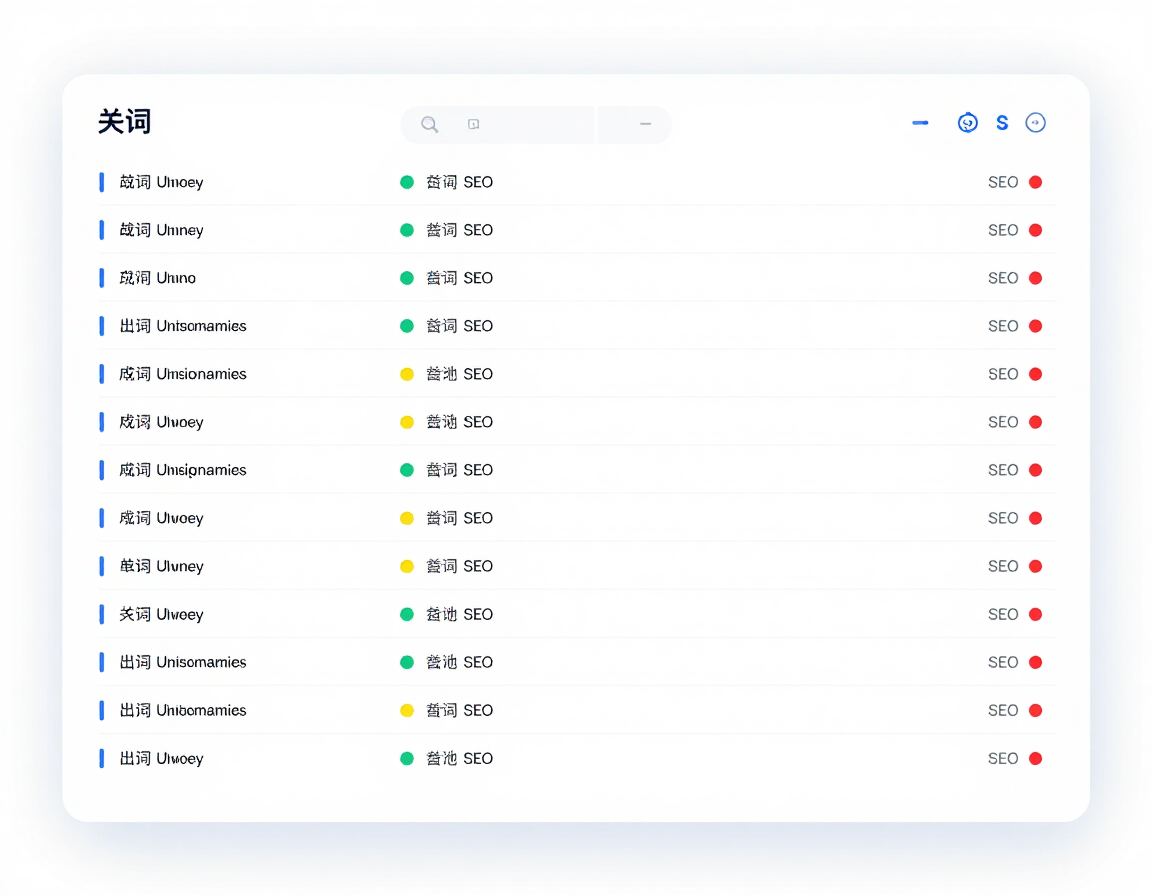
Keyword-to-page mapping turns a raw keyword list into an organized content architecture. Every priority keyword is assigned to a specific page — existing or new — based on intent alignment, topical relevance, and competitive positioning.
We document primary and supporting keyword assignments for every page, flag pages that are competing for the same queries, and provide clear guidance on consolidation or differentiation before new content is produced.
Core deliverables of the page mapping process:
• Primary keyword assignment for each target page
• Supporting keyword clusters per page
• Cannibalization identification and resolution plan
• New page recommendations with target keyword and intent noted
Prioritization Framework
Not All Keywords Are Worth Pursuing First
A keyword list without prioritization is just noise. We use three factors — keyword difficulty, business value, and competitive gap — to rank keyword opportunities inside your SEO Strategy roadmap so effort is directed where it will produce the most measurable return.
Difficulty vs. Your Current Authority
We compare keyword difficulty scores against your domain's current authority level to identify which keywords are realistically winnable in a 6- or 12-month window and which require more foundational work first.
Revenue and Lead Impact
High-volume keywords are not always high-value keywords. We weight keyword opportunities by their proximity to purchase intent, average deal size, and service relevance so the roadmap reflects business priorities, not just traffic numbers.
Where Competitors Are Vulnerable
We cross-reference your keyword opportunities against competitor profiles to find gaps — queries where competitors rank but hold weak or thin content — giving you realistic entry points with lower competitive resistance.
The result is a prioritized keyword plan embedded directly in your SEO Strategy roadmap — sequenced by phase so your team or ours knows exactly what to work on first.
Next Step
Ready to Build a Smarter Keyword Strategy?
Keyword research without context produces the wrong list. Page mapping without a strategy produces the wrong pages. Start with a discovery call and we'll walk through your current search visibility, competitive landscape, and where a focused keyword strategy can move the needle.
Keyword research and page mapping are included in every SEO Strategy engagement and available as a standalone service for businesses with existing SEO programs that need a stronger content foundation.
Arizona-based. Serving local and national businesses.